The 3 Best Electrolytes for Menopause Bloating
Let me guess: You’re drinking water like it’s your job, eating “all the right things,” and yet you still feel like a balloon by 3 PM. Your jeans don’t lie, and neither does that uncomfortable, puffy feeling that seems to have moved in permanently around perimenopause.
Here’s what I’ve learned in my own 50s while navigating IBS-C and the wild ride of hormonal changes: the best electrolytes for menopause aren’t just about hydration. They’re about addressing the gut-hormone connection that’s making us bloat in the first place.
I’ve spent years figuring out why our bellies betray us during this life stage. Today, I’m diving into the three electrolytes that actually move the needle on menopause bloating. And I promise, this isn’t just another “drink more water” lecture.

Key Takeaways
- Magnesium is one of the best electrolytes for menopause bloating because it directly supports slower gut motility and helps muscles relax throughout your digestive tract
- Potassium works with sodium to regulate fluid balance and reduce water retention that makes bloating worse during hormonal shifts
- Sodium gets a bad rap, but the right amount helps prevent dehydration cycles that trigger both hot flashes and digestive backup
- Electrolyte imbalances worsen during menopause due to night sweats, hot flashes, and changing estrogen levels that affect how your body holds onto minerals[1]
- Bio-individual nutrition matters: What works for your best friend might not work for you. Start with one electrolyte at a time and track your symptoms
Why Menopause Turns Your Belly Into a Bloat Factory
Before we talk solutions, let’s talk about why this is happening. And no, you’re not imagining it.
During perimenopause and menopause, your estrogen levels drop. But here’s the hardest part: your gut bacteria (specifically, the estrobolome) are responsible for metabolizing estrogen. When that delicate balance gets disrupted, everything downstream gets messy.
Add in slower gut motility. If you’re not sure what that is, that’s the fancy term for your digestive system moving at a snail’s pace. When that slows down you’ve got the perfect storm for bloating, constipation, and feeling generally uncomfortable in your own skin.
I call it the “double whammy.” If you’re already dealing with IBS like I am, unfortunately, menopause just makes things worse.

The Electrolyte Connection You Need to Understand
Think of electrolytes like the traffic signals in your body. They tell your muscles when to contract and relax, they regulate how much water your cells hold onto, and they’re essential for nerve signals that keep everything moving smoothly.
When you’re sweating through your sheets at 2 AM or having hot flashes that could power a small city, you’re losing electrolytes faster than you can replace them[1]. This creates a cascade effect:
- Your body gets dehydrated
- Your gut slows down even more
- You retain water in all the wrong places
- Your nervous system sends wonky signals that can trigger more hot flashes[1]
- Bloating intensifies because nothing is moving through your system efficiently
For more on why this happens, check out my deep dive on why menopause bloating and IBS-C happen.
The 3 Best Electrolytes for Menopause Bloating
Let’s get to the good stuff. These three electrolytes are game-changers for perimenopause bloating relief, and I’m ranking them by impact.
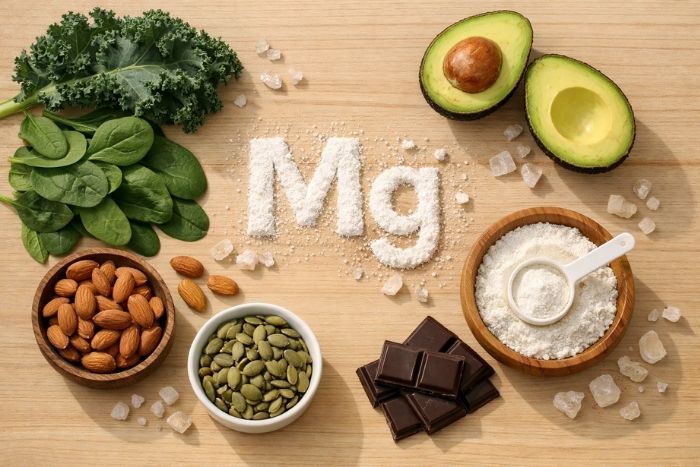
1. Magnesium: The Gut Motility Miracle Worker 🌟
Why it’s #1 for bloating: Magnesium is like a gentle massage therapist for your entire digestive tract. It helps relax the smooth muscles in your intestines, which means things actually move through instead of sitting there making you miserable.
Here’s what magnesium does for us in midlife:
- Draws water into your intestines, which softens stool and makes elimination easier (crucial when slower gut motility is working against you)
- Relaxes muscle tension throughout your GI tract, reducing cramping and that “stuck” feeling
- Supports the gut-hormone connection by helping regulate cortisol (stress hormone) that spikes during menopause
- Acts as a natural muscle relaxant, which helps with both digestive cramping and those middle-of-the-night leg cramps
Personal note: I started taking magnesium glycinate about two years ago, and the difference in my morning routine was noticeable within three days. Not dramatic, just consistent. And when you’re dealing with IBS, consistent means the world to you.
How much you need: Most women in menopause need 320mg daily, but many of us are deficient[1]. Start with 200-300mg and adjust based on how your body responds.
Best forms for bloating:
- Magnesium glycinate (gentle, doesn’t cause loose stools)
- Magnesium citrate (more of a laxative effect—good if you’re really backed up)
- Avoid magnesium oxide (poor absorption)
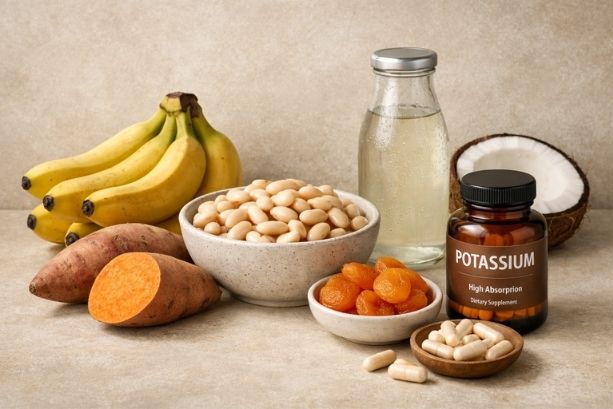
2. Potassium: The Fluid Balance Fixer
Why this is one of the best electrolytes for menopause bloating: While magnesium gets your gut moving, potassium tackles the water retention piece.
Potassium works hand-in-hand with sodium to regulate how much fluid your cells hold onto. During hormonal fluctuations, this balance gets thrown off, and you end up with that puffy, swollen feeling—especially around your midsection.
What potassium does:
- Counteracts sodium to prevent excessive water retention
- Supports proper muscle contractions in your digestive tract (including the smooth muscle that moves food through)
- Helps regulate blood pressure, which often becomes an issue during menopause (another thing I have)
- Reduces that “pregnant belly” bloat by balancing cellular fluid levels
Think of the sodium-potassium relationship like a seesaw. When one side gets too heavy (usually sodium in our modern diets), the other side needs to come up to balance things out.
How much you need: The recommendation is 2,600mg daily for women, but most of us get nowhere near that amount[2].
Best food sources:
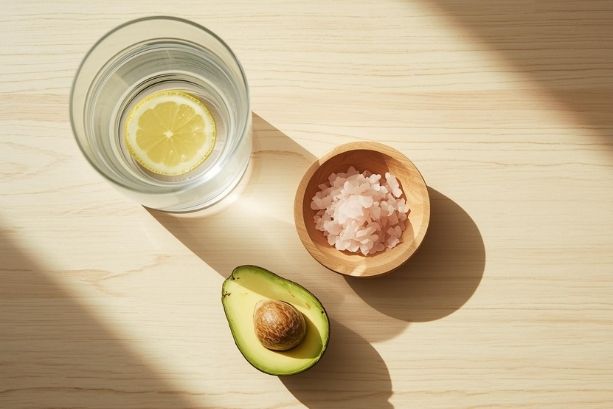
- Avocado (half has about 487mg)
- Sweet potato (542mg in one medium potato)
- Spinach (cooked, 1 cup = 839mg)
- Coconut water (natural electrolyte source)
- White beans (1 cup = 1,004mg)
Important: Don’t just supplement potassium without talking to your doctor, especially if you take blood pressure medication. Too much can be dangerous. Focus on food sources first.
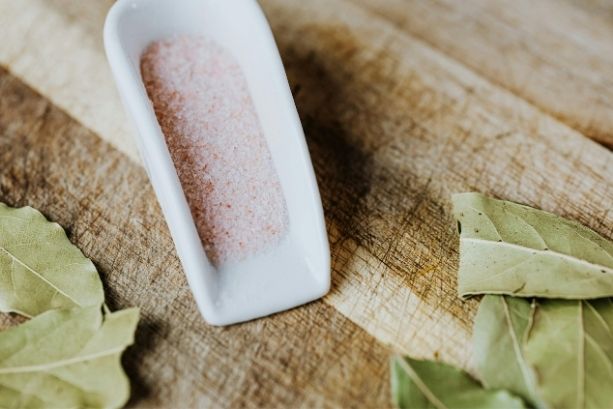
3. Sodium: The Misunderstood Hydration Hero
We’ve been told to avoid sodium like the plague. But here’s the truth: the right amount of sodium is essential for preventing the dehydration cycles that make both hot flashes and bloating worse[1].
Why sodium matters during menopause:
When you’re losing fluids through night sweats and hot flashes, you’re losing sodium too. Without adequate sodium, your body can’t actually absorb and use the water you’re drinking. It’s like trying to fill a bucket with holes in it.
What sodium does for midlife digestive flare-ups:
- Helps your body actually absorb water (this is why electrolyte drinks work better than plain water)
- Supports nerve signaling to your digestive tract
- Maintains blood volume, which affects how efficiently nutrients move through your system
- Prevents the fatigue that makes us too tired to cook healthy meals (leading to worse food choices and more bloating)
The sodium paradox: Too little sodium can actually cause water retention because your body goes into “conservation mode” and holds onto every drop.
How much you need: This is where bio-individual nutrition comes in. If you eat a lot of processed foods, you’re probably getting too much. If you eat mostly whole foods and sweat a lot (exercise, night sweats, hot flashes), you might need more than you think.
Best approach:
- Use high-quality sea salt or Himalayan pink salt when cooking
- Add a pinch to your water bottle (especially post-workout or after a night of sweating)
- Look for electrolyte powders for women in menopause that balance all three of these minerals

How to Use These Electrolytes Together (Without Overdoing It)
Here’s my daily ritual that keeps bloating in check:
Morning:
- 200mg magnesium glycinate with breakfast
- Pinch of sea salt in my first glass of water
- Potassium-rich breakfast (avocado toast on sourdough or a sweet potato hash)
Afternoon:
- Electrolyte drink if I’ve had hot flashes or a sweaty workout
- Leafy greens with lunch (spinach or kale for magnesium and potassium)
Evening:
- Another 100-200mg magnesium before bed (helps with sleep too)
- Herbal tea instead of more water (to avoid middle-of-the-night bathroom trips)
Pro tip: Don’t start all three at once. Add magnesium first for two weeks and track your bloating. Then adjust your potassium intake through food. Finally, fine-tune your sodium based on how you feel.
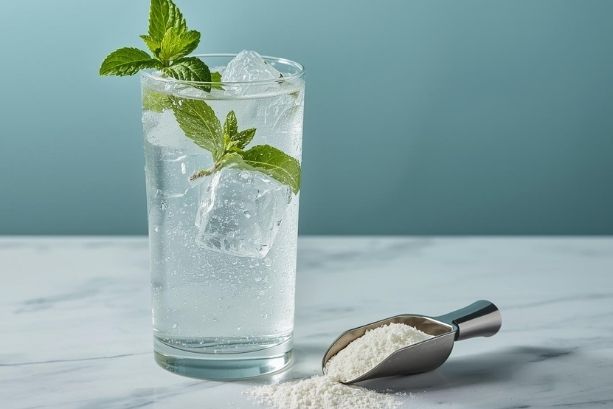
What About Electrolyte Drinks? (The Good, Bad, and Sugary)
While companies may say they are the best electrolytes for menopause bloating, not all electrolyte drinks are created equal. Especially for those of us dealing with gut sensitivities and lactose intolerance.
Watch out for:
- Added sugars (they feed bad bacteria and make bloating worse)
- Artificial sweeteners (can trigger IBS symptoms)
- High fructose content (a FODMAP that causes gas and bloating)
- Dairy-based formulas (if you have lactose sensitivity in menopause)
Look for:
- Sugar-free options without artificial sweeteners (stevia or monk fruit are usually okay)
- Balanced ratios of sodium, potassium, and magnesium
- No artificial colors or flavors
- Low-FODMAP ingredients if you’re sensitive
Some well-reviewed options include products free from sugar and artificial sweeteners that focus on fast hydration[3]. Just read labels carefully because marketing can be misleading.
For specific product recommendations, check out my guide to the best electrolyte powders for women in menopause.
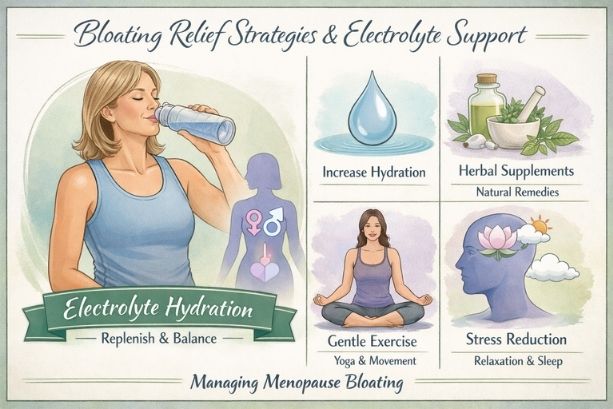
The Gut-Hormone Connection: Why Electrolytes Aren’t the Whole Story
While the best electrolytes for menopause bloating make a real difference, they work best as part of a bigger strategy for hormonal gut health.
Make sure to support your microbiome diversity with:
- Probiotic-rich foods (or a quality supplement. Here are the best probiotics for bloating we’ve tested)
- Gut-healing bone broth (here’s my go-to recipe)
- Fiber from low-FODMAP sources (if you’re sensitive)
- Stress management (cortisol wreaks havoc on your estrobolome)
Remember: Your gut bacteria are processing your hormones. When you support microbiome diversity, you’re supporting your entire hormonal transition.
Common Mistakes That Make Menopause Bloating Worse
I’ve made all of these, so learn from my trial and error:
❌ Drinking tons of plain water without electrolytes (you just pee it all out)
❌ Taking too much magnesium citrate (urgent bathroom trips become frequent)
❌ Cutting out all sodium (makes dehydration and fatigue worse)
❌ Ignoring food sources and relying only on supplements
❌ Not tracking what actually works for YOUR body (bio-individual nutrition is real)
✅ Instead: Start with one change, track it for two weeks, and adjust based on your actual symptoms, not what worked for someone else.
When to See a Doctor About Electrolyte Imbalances
While most of us can safely adjust our electrolyte intake through food and basic supplementation, there are times when you need professional help.
See your doctor if you experience:
- Severe or persistent heart palpitations[1]
- Extreme fatigue that doesn’t improve with rest
- Ongoing nausea[1]
- Muscle weakness or severe cramping
- Confusion or dizziness
- Irregular heartbeat
Important: If you take medications for blood pressure, heart conditions, or kidney issues, talk to your doctor before supplementing with potassium or significantly changing your sodium intake.
Conclusion: Small Changes, Big Relief
Listen, menopause is already throwing us enough curveballs. We don’t need our bellies joining the chaos.
The best electrolytes for menopause bloating, magnesium, potassium, and sodium, work together to address the root causes: slower gut motility, fluid imbalances, and the dehydration cycles that make everything worse.
But here’s what I want you to remember most: You’re not broken. Your body is changing, and it needs different support now than it did at 35. That’s not a failure. That’s biology.
Start with magnesium. Add potassium-rich foods. Don’t fear salt. Track what works for YOUR body, not your sister’s or your coworker’s.
And most importantly, be patient with yourself. We didn’t get here overnight, and we won’t fix it overnight either. But consistent, informed choices add up to real relief.
You’ve got this. We’ve got this. And on the days when it doesn’t feel like it, remember: you’re not alone in this journey.
That’s why I built this community at Better Belly Co., because navigating midlife digestive flare-ups is hard enough without feeling like you’re doing it solo.

Ready to Fast-Track Your Relief?
If you’re feeling overwhelmed by where to start, or if your IBS and menopause bloating feel like they need a dedicated “intervention,” I’ve created something specifically for you.
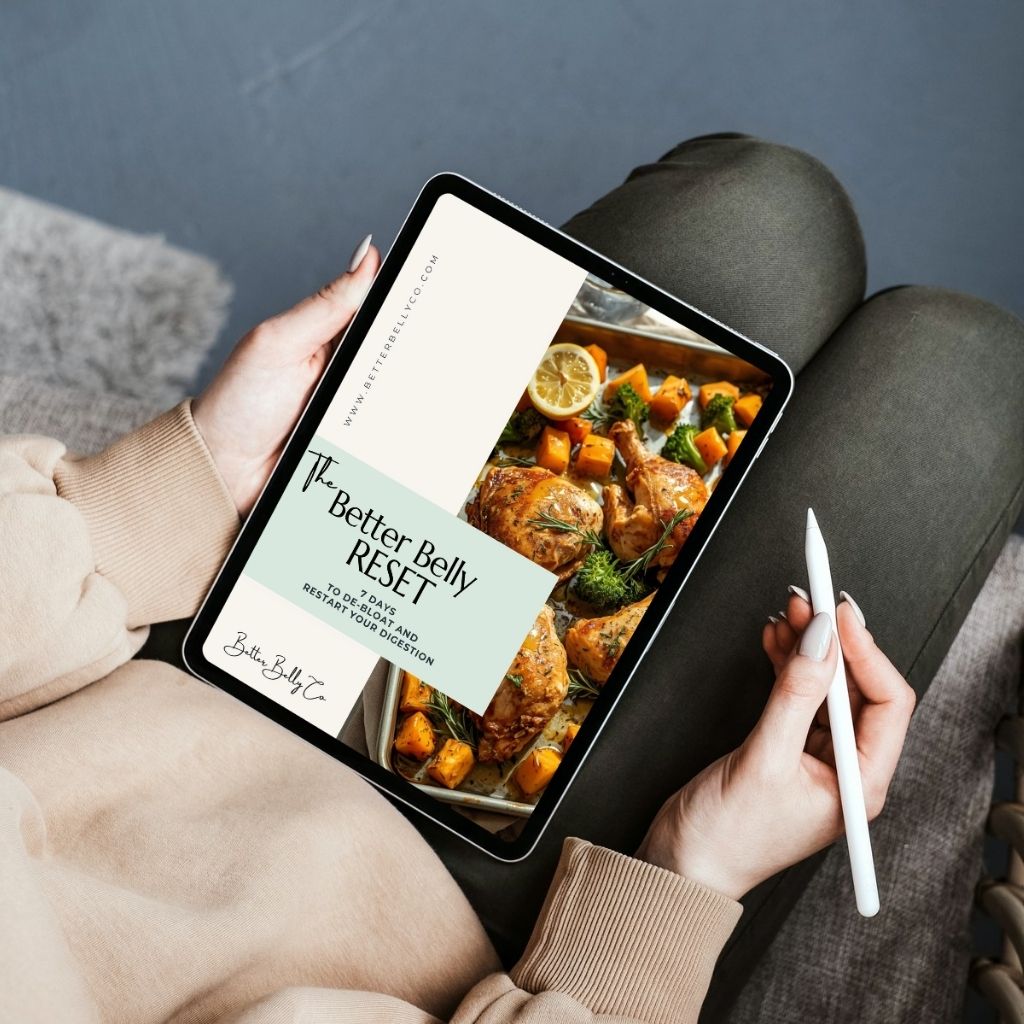
I’ve taken everything I’ve learned from my own journey and the science behind Better Belly Co. to create “The Better Belly Reset: 7 Days to De-Bloat and Restart Your Digestion.“
Inside this FREE PLAN, I’ll show you:
- The exact 7-day meal plan designed to be gentle on the gut and high in bloat-busting minerals.
- The “Better Belly” List: A belly-friendly grocery guide focused on low-FODMAP, high-mineral foods.
- The “Gut-Hormone” morning ritual to kickstart motility before your first cup of coffee.
Click here to download The Better Belly Reset for free and let’s get you back to feeling like yourself again.
You’ve got this. We’ve got this. And I’ll be with you every step of the 7-day way.
Remember: Trial and error is okay. Giving up is not.
XOXO,

References
[1] Electrolyte – https://www.menopausenaturalsolutions.com/blog/electrolyte
[2] Electrolytes Drinks – https://www.healthline.com/nutrition/electrolytes-drinks
[3] Best Electrolytes – https://www.bbcgoodfood.com/review/best-electrolytes
[4] Best Electrolyte Powders – https://fortune.com/article/best-electrolyte-powders/
[5] Best Electrolyte Powder Drinks – https://www.goodhousekeeping.com/food-products/g40668222/best-electrolyte-powder-drinks/

Jacqueline Ramirez
I help women in perimenopause and menopause navigate gut health with clarity and confidence. Through simple, gut‑safe food systems and real‑life guidance, I make eating feel calmer and more manageable again.