Forget SUPPLEMENTS! 3 Real Food Pivots to Restart Your Menopause Gut
Your gut didn’t fail you. The rulebook just expired.
That’s the thing nobody tells us when we hit our mid-40s and suddenly the Greek yogurt, the oatmeal, and the “eat less, move more” routine that worked for a decade starts making us feel worse. Bloated. Sluggish. Gassy at 2 PM. Constipated for three days, then the opposite.
If you’ve been searching for answers about your menopause gut and landing on a pile of supplement ads, you’re in the right place and we’re taking a different road today.
When perimenopause hit, it felt like a double whammy. My gut issues didn’t just get louder, they got confusing. The foods I trusted didn’t sit right anymore. And I know I’m not alone in that.
So let’s skip the supplement morning routine many women rely on. Today, I’m showing you 3 real food pivots where the actual work happens.
Key Takeaways
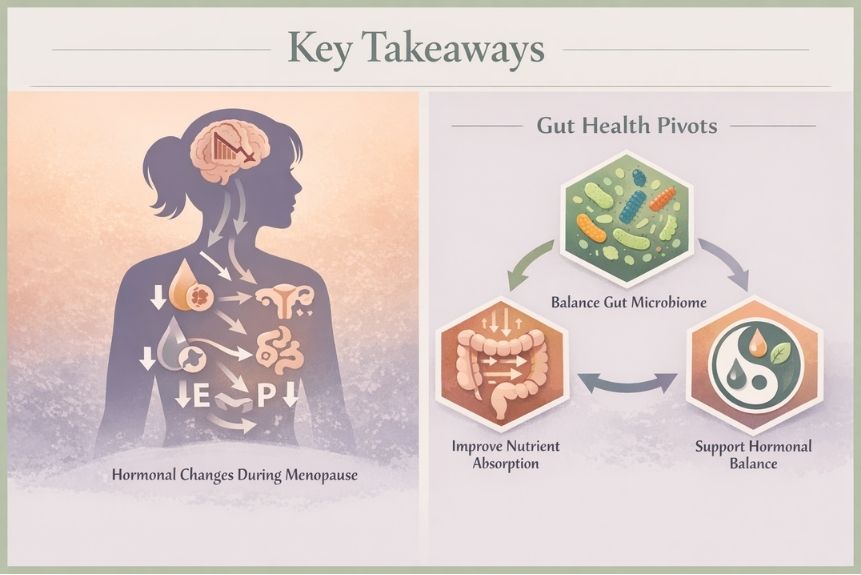
- Estrogen loss directly disrupts your gut microbiome — specifically the estrobolome, the group of bacteria that processes estrogen.
- Eating carbohydrates after fiber and protein (GPS Sequencing) can dramatically reduce post-meal bloating and blood sugar spikes.
- Plain water isn’t always enough — mineral-rich hydration and bone broth support your gut lining in ways water alone can’t.
- Progesterone loss keeps your nervous system on high alert, slowing digestion and amplifying every midlife digestive flare-up.
- You don’t need to overhaul everything at once. Start with one pivot. Build from there.
Why the “Old Rules” No Longer Work for Your Menopause Gut
Here’s the honest truth: your body in perimenopause is operating under a completely different hormonal blueprint than your body after 35.
Estrogen and progesterone aren’t just reproductive hormones. They are gut regulators, mood stabilizers, and metabolic managers. When they start fluctuating, and eventually declining, your entire digestive system feels the shift.
This is where the concept of hormonal gut health becomes so important. Your gut and your hormones are in constant conversation. And right now, that conversation has gotten very loud and very messy.
There’s also the estrobolome to consider. This is the specific community of gut bacteria responsible for metabolizing estrogen. When your microbiome diversity drops (which happens naturally in midlife), your estrobolome weakens. That means estrogen isn’t being processed efficiently, which creates a feedback loop of hormonal and digestive chaos.
“The gut-hormone connection isn’t a wellness trend. It’s physiology. And understanding it is the first step to working with your body, not against it.”
The good news? You don’t need a prescription or a supplement stack to start shifting things. You need a new map for a new stage of life.
If you’re still figuring out what’s happening in your gut right now, my articles on digestive issues and menopause is a great place to start.
Pivot #3: Master Your “GPS” Foods
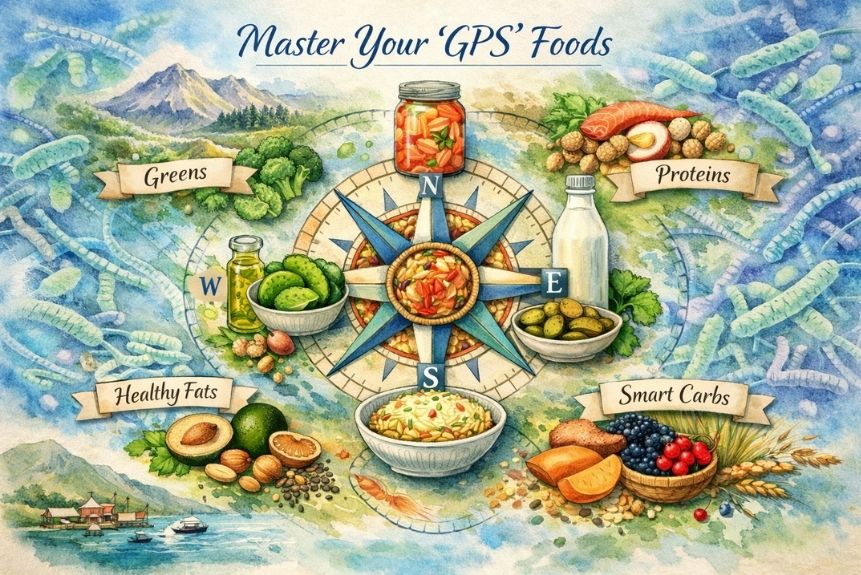
What Are GPS Foods?
GPS = Grains, Potatoes, Sweets. These are the carbohydrate-heavy staples that most of us have eaten without a second thought for years.
Oatmeal. Brown rice. Potato. Whole wheat toast. A square of dark chocolate. All “healthy.” All potentially working against you right now, not because they’re bad foods, but because of the timing and context in which we eat them.
The Biological Shift
When estrogen declines, insulin sensitivity decreases. Think of insulin as the key that unlocks your cells to receive glucose (sugar from carbs). In perimenopause, that key starts sticking. Your cells don’t respond as quickly, so blood sugar spikes higher and stays elevated longer.
The result? That 2:00 PM wall. The energy crash after breakfast. The bloating that hits an hour after a “healthy” meal.
This is also connected to slower gut motility: the speed at which food moves through your digestive tract. Lower estrogen = slower transit time. Think of it like a slow-moving traffic jam on a holiday weekend. Everything backs up, ferments a little, and creates gas and bloating.
Meet Helen
Helen, a 52-year-old teacher, who was completely baffled. She’d been eating oatmeal with banana every morning for years. “It’s heart-healthy!” she said. But by 2 PM, she was leaning against the wall in the hallway, exhausted and bloated.
The oats weren’t the villain. The sequencing was the problem.
The GPS Sequencing Strategy
Eat your fiber and protein FIRST. Then eat your GPS foods.
Here’s what that looks like in practice:
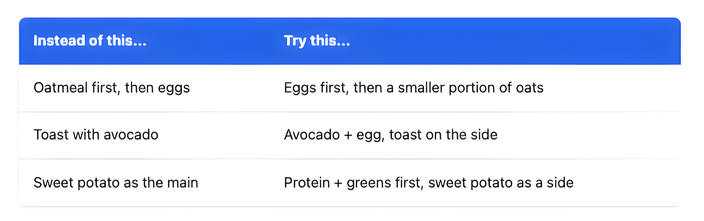
This simple reorder creates a digestive buffer. Fiber slows glucose absorption. Protein triggers satiety hormones. By the time the GPS foods hit your system, your blood sugar response is far gentler.
This is bio-individual nutrition in action. Not a one-size-fits-all diet, but a smarter framework for your changing body.
Pivot #2: Move Beyond Plain Water
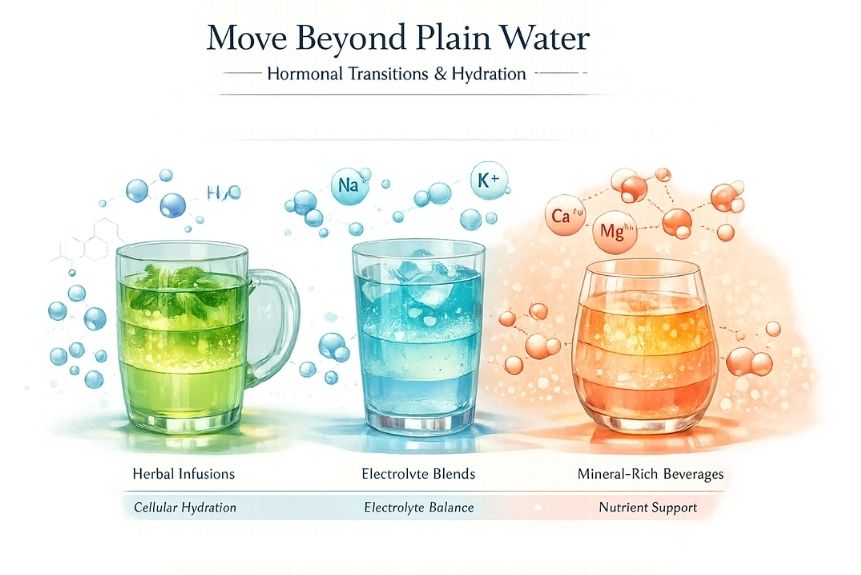
The Hydration Lie We Were Told
“Drink eight glasses of water a day.” We’ve heard it a thousand times. And while hydration is genuinely important, plain water alone can sometimes flush minerals out faster than your cells can absorb them, especially in midlife when mineral retention already decreases.
This is the “hydration lie”. Not that water is bad, but that more plain water is always the answer.
The Biological Shift
Estrogen helps regulate cellular fluid balance. As it drops, your cells become less efficient at holding onto electrolytes like sodium, potassium, and magnesium. The result?
You drink and drink, but you still feel:
- Heavy-legged and puffy
- Foggy-brained by noon
- Constipated despite “drinking enough”
This is perimenopause bloating that plain water simply cannot fix.
Meet Stacy
Okay, Stacy is actually a composite of a dozen women in our community who described the same thing: “I felt like I had a brick in my gut no matter how much water I drank.” The shift came when they added structure to their morning hydration, specifically, starting the day with something that actually feeds the gut lining.
The “Amino-Prime” Morning Routine
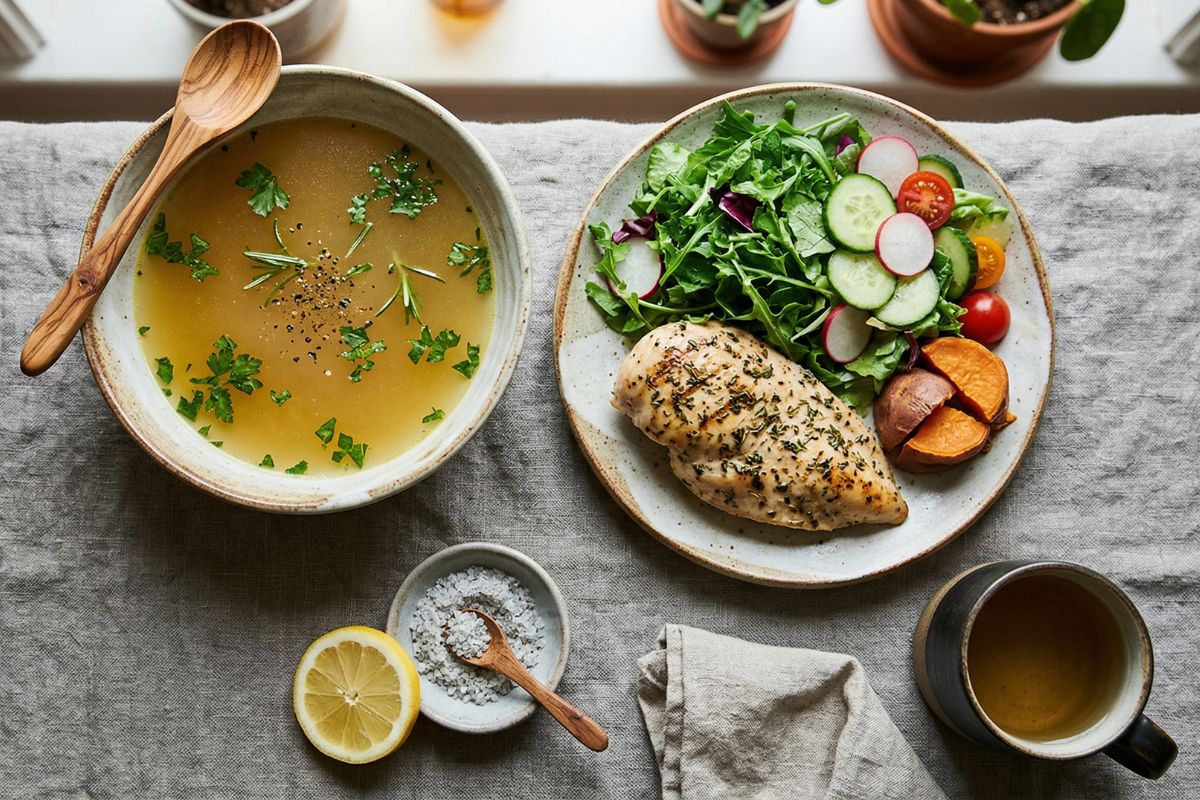
Before your coffee. Before your oats. Before anything else, start with bone broth or a collagen-rich drink.
Here’s why this works:
- Bone broth contains glycine and glutamine, amino acids that literally repair the gut lining.
- It delivers minerals in a bioavailable form your cells can actually use.
- It supports the gut-hormone connection by reducing intestinal permeability (leaky gut), which can worsen hormonal imbalance.
My gut-healing bone broth recipe for women in menopause is one of the most-loved resources in my community and it takes about 10 minutes of hands-on time.
If you want to know more about whether electrolytes might also play a supporting role, I break that down in my guide to the best electrolytes for menopause bloating.
Pivot #1: The Nervous System–Gut Connection
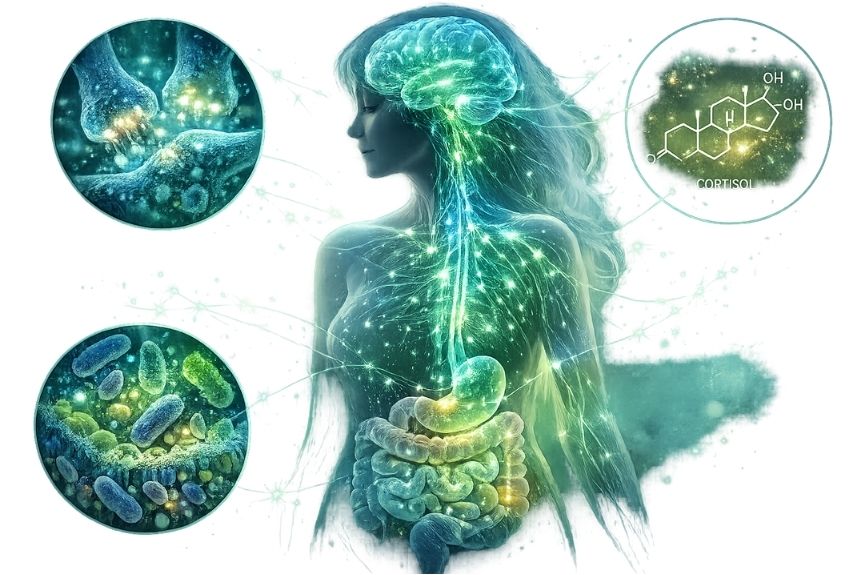
The Silent Culprit Nobody Talks About
This is the pivot that surprises people the most. Because it’s not about what you eat, it’s about the state your body is in when you eat it.
When progesterone declines in perimenopause, your nervous system loses one of its primary calming agents. Progesterone is naturally sedating and anti-anxiety. Without it, many of us walk around in a low-grade “high alert” state, even when nothing is technically wrong.
Your gut feels this immediately.
The Cortisol Factor
When your nervous system is stressed, your body releases cortisol. Cortisol is a survival hormone. It tells your body: “This is not the time to digest. This is the time to survive.”
Digestion slows. Gut motility drops further. Stomach acid production decreases. And that meal you ate at your desk while answering emails? It’s sitting in your gut like a stone.
This is a major driver of midlife digestive flare-ups and it’s completely underreported.
The Sleep Link
Poor sleep raises cortisol. Higher cortisol disrupts blood sugar. Disrupted blood sugar increases cravings for GPS foods. And then we wonder why we’re reaching for crackers at 10 PM and waking up bloated.
Sleep is a gut health intervention. Full stop.
I go deeper on the menopause-bloating-IBS connection in this piece on why menopause bloating and IBS-C happen because understanding the why is genuinely half the battle.
Practical Nervous System Resets
You don’t need a meditation retreat. You need small, consistent signals that tell your body it’s safe.
Try these tonight:
- Cool your room to 65–68°F. Body temperature regulation is disrupted in menopause. A cooler environment supports deeper sleep and lower cortisol.
- Ditch screens at least 30 minutes before bed. Blue light suppresses melatonin and keeps the nervous system activated. This is non-negotiable for us.
- Eat your last meal 2–3 hours before sleep. Late eating keeps digestion active when your body needs to repair.
- Do a 5-minute “brain dump” journal. Write down tomorrow’s to-do list before bed. It signals your brain that it can let go for the night.
These aren’t hacks. They’re physiological anchors that support your gut-hormone connection from the ground up.
Conclusion: You Are the Navigator
Here’s what I want you to take away from all of this:
You don’t need to biohack your way through menopause. You don’t need 12 supplements, a $400 gut test, or a protocol designed for a 28-year-old male athlete.
You need a steady map for this specific season of life.
The three pivots I covered, GPS Sequencing, mineral-rich hydration, and nervous system support, are not extreme. They’re not a diet. They’re a recalibration.
And you don’t have to do all three at once. Start with Pivot #1: your nervous system and sleep. Everything else, digestion, energy, bloating, improves when your body feels safe enough to actually rest and repair.
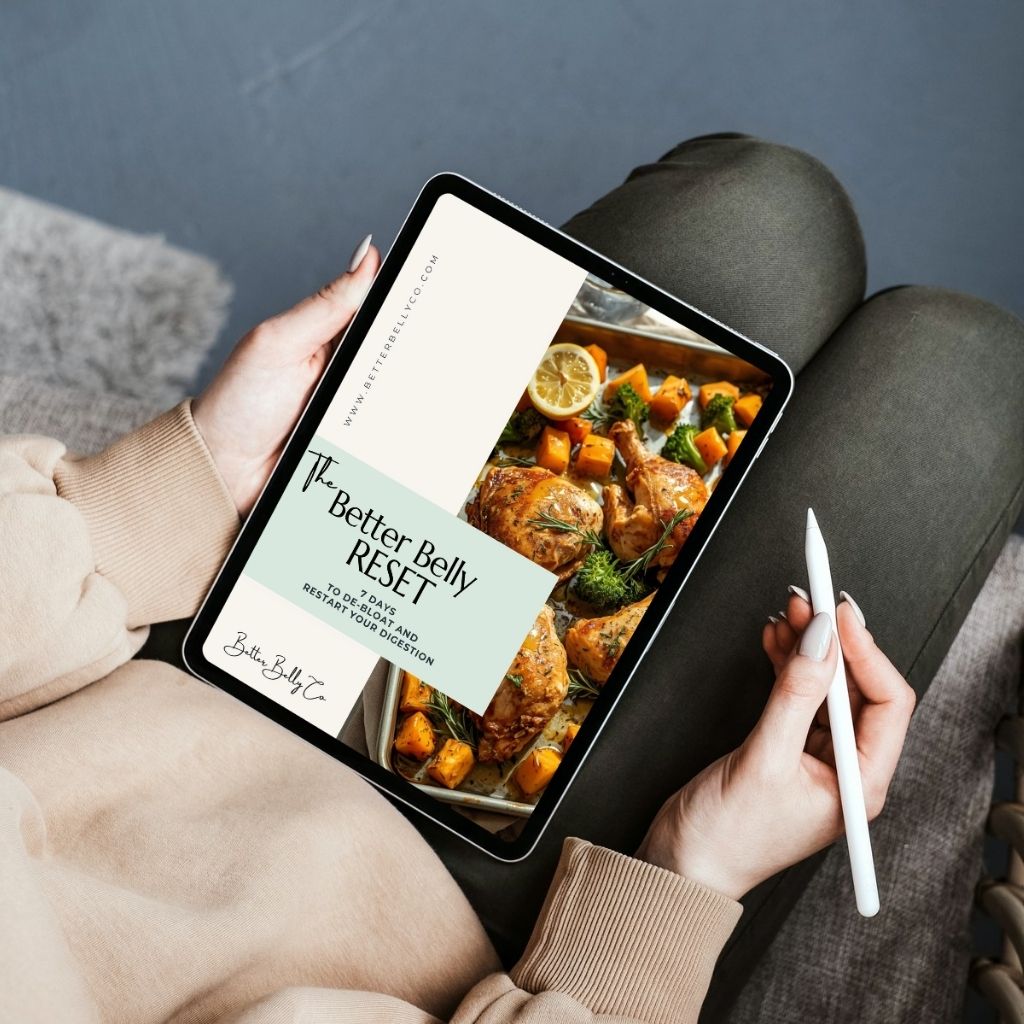
When you’re ready to go deeper, my Better Belly Reset is a 7-day real food roadmap built specifically for women navigating these exact changes. No supplements required. Just food, structure, and a community that gets it.
We’re in this together. 💛
Trial and error is okay. Giving up is not.
XOXO,

Ready to Fast-Track Your Relief?
If you’re feeling overwhelmed by where to start, or if your IBS and menopause bloating feel like they need a dedicated “intervention,” I’ve created something specifically for you.
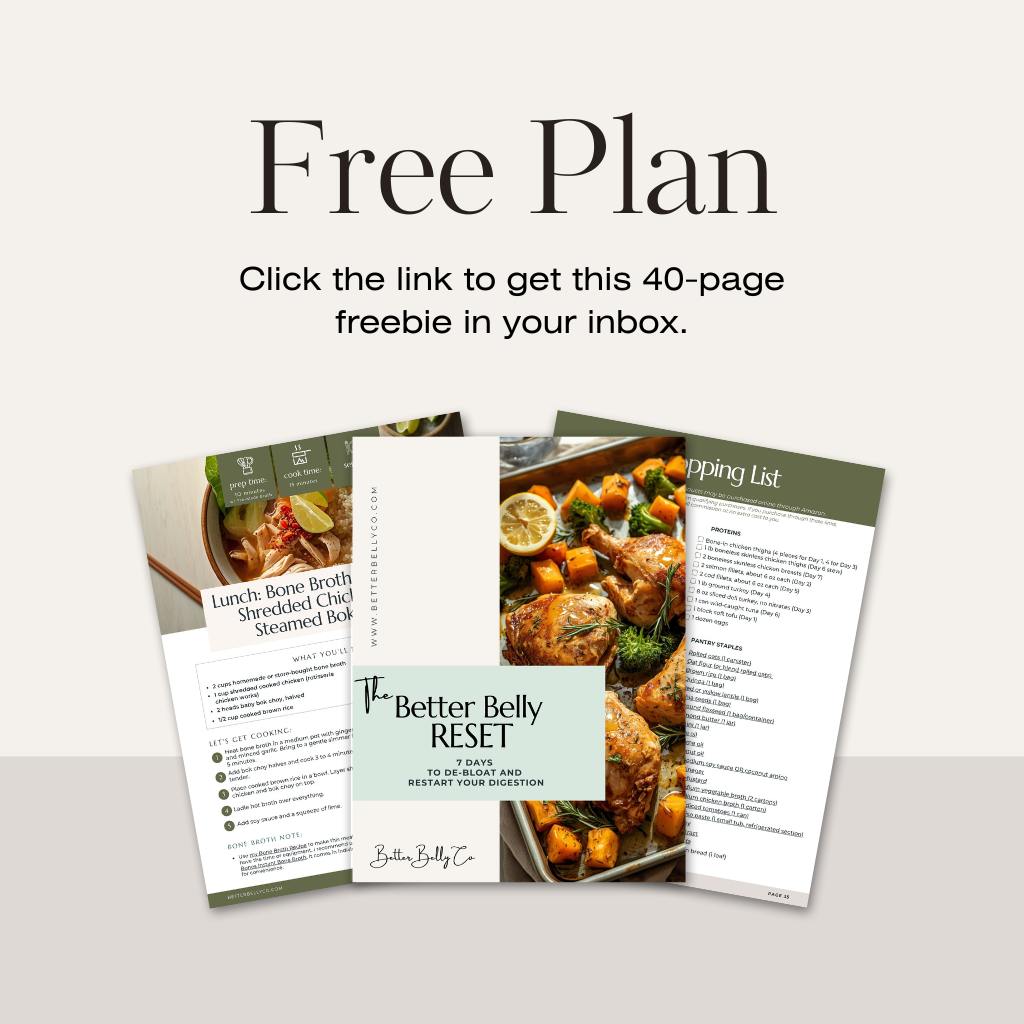
I’ve taken everything I’ve learned from my own journey and the science behind Better Belly Co. to create “The Better Belly Reset: 7 Days to De-Bloat and Restart Your Digestion.“
Inside this FREE PLAN, I’ll show you:
- The exact 7-day meal plan designed to be gentle on the gut and high in bloat-busting minerals.
- The “Better Belly” List: A belly-friendly grocery guide focused on low-FODMAP, high-mineral foods.
- The “Gut-Hormone” morning ritual to kickstart motility before your first cup of coffee.
Click here to download The Better Belly Reset for free and let’s get you back to feeling like yourself again.
You’ve got this. We’ve got this. And I’ll be with you every step of the 7-day way.
Frequently Asked Questions
Why did my gut health change so suddenly in my 40s?
Your body is following a new hormonal blueprint. Estrogen and progesterone are gut regulators. When these hormones drop, your digestion slows down and your gut bacteria change. Foods that worked for you for years may now cause gas or bloating because your system processes them differently.
What is the estrobolome and why does it matter?
The estrobolome is a specific group of bacteria in your gut. Its job is to process and clear out estrogen. During menopause, your gut diversity often decreases. This weakens the estrobolome. If your gut cannot process estrogen efficiently, it can lead to more digestive trouble and hormonal imbalance.
Do I have to stop eating bread and pasta to fix my bloating?
You do not have to cut out these foods. You only need to change when you eat them. Eating fiber and protein before your grains or sweets creates a buffer. This prevents the blood sugar spikes that cause bloating and energy crashes.
Why is plain water not enough for hydration anymore?
Lower estrogen levels make it harder for your cells to hold onto minerals like magnesium and potassium. Plain water can sometimes flush these remaining minerals away. Adding bone broth or mineral rich liquids helps your gut lining and keeps your cells truly hydrated.
How does stress affect my menopause gut?
Progesterone is a natural calming agent. As it declines, your nervous system stays on high alert. This triggers cortisol, which tells your body to stop prioritizing digestion. Stress literally stalls your gut motility, making food feel like a stone in your stomach.
Can better sleep really improve my digestion?
Yes. Poor sleep raises cortisol and disrupts your blood sugar. This leads to cravings and slow digestion. Setting a consistent bedtime routine and keeping your room cool helps your nervous system feel safe. When your body feels safe, it can focus on repairing your gut.
References
Baker, J. M., Al-Nakkash, L., & Herbst-Kralovetz, M. M. (2017). Estrogen–gut microbiome axis: Physiological and clinical implications. Maturitas, 103, 45–53. https://doi.org/10.1016/j.maturitas.2017.06.025
Sims, S. T., & Heather, A. K. (2018). Myths and methodologies: Reducing scientific design ambiguity in studies comparing sexes and/or menstrual cycle phases. Experimental Physiology, 103(10), 1309–1317. https://doi.org/10.1113/EP086797
Qi, X., Yun, C., Pang, Y., & Qiao, J. (2021). The impact of the gut microbiota on the reproductive and metabolic endocrine system. Gut Microbes, 13(1), 1–21. https://doi.org/10.1080/19490976.2021.1894070
Thursby, E., & Juge, N. (2017). Introduction to the human gut microbiota. Biochemical Journal, 474(11), 1823–1836. https://doi.org/10.1042/BCJ20160510
Kwa, M., Plottel, C. S., Blaser, M. J., & Adams, S. (2016). The intestinal microbiome and estrogen receptor–positive female breast cancer. JNCI: Journal of the National Cancer Institute, 108(8). https://doi.org/10.1093/jnci/djw029
Harvard T.H. Chan School of Public Health. (2022). The Nutrition Source: Carbohydrates and Blood Sugar. https://www.hsph.harvard.edu/nutritionsource/carbohydrates/carbohydrates-and-blood-sugar/
Talbott, S. M. (2019). The Cortisol Connection: Why Stress Makes You Fat and Ruins Your Health. Hunter House.
Moore, S. (2023). Nutritional approaches to perimenopause: A clinical practitioner’s guide. Functional Nutrition Alliance.
Note about Safety:
Note: These statements have not been evaluated by the FDA. These products are not intended to diagnose, treat, cure, or prevent any disease. Always consult your healthcare provider before starting any new supplement, especially if you have existing health conditions.

Jacqueline Ramirez
I help women in perimenopause and menopause navigate gut health with clarity and confidence. Through simple, gut‑safe food systems and real‑life guidance, I make eating feel calmer and more manageable again.